Classrooms without teachers: Karnataka’s 45,000+ Teacher Shortage

0

In a government school on the outskirts of Kalaburagi, a Class 8 science period begins late – not because students are absent, but because the teacher assigned to the class is simultaneously teaching two other sections. Practical lessons are deferred, homework remains unchecked for weeks, and questions that need patient explanation are often carried forward indefinitely. For many students, this has become the rhythm of schooling.

Across Karnataka, more than 45,000 sanctioned teaching posts in government schools remain vacant, according to official data presented by the state’s education department. While aggregate student–teacher ratios reported at the state level remain within prescribed norms — largely due to the large-scale deployment of guest and contract teachers — the day-to-day classroom experience in many schools tells a different story. Teachers are routinely required to handle multiple classes, subjects, or grades, stretching instructional time and individual attention thin.

For students, especially those in foundational and middle-school years, the impact is immediate and cumulative. Lessons are compressed, assessments delayed, and conceptual gaps left unresolved. In schools serving first-generation learners and rural communities, the shortage does not merely disrupt timetables; it reshapes how learning itself is delivered – often turning classrooms into spaces focused on syllabus coverage rather than understanding. Behind Karnataka’s teacher vacancy figures lies a quieter consequence: a generation of students learning under persistent instructional stress.

A Shortage That Looks Manageable on Paper – and Overwhelming in Practice

At the state level, Karnataka’s school education system appears, at first glance, to be functioning within prescribed norms. Official datasets show that aggregate student–teacher ratios remain compliant with national standards, a picture sustained in part by the widespread deployment of guest and contract teachers to offset long-standing vacancies.

Yet this numerical stability conceals significant stress at the school level. With more than 45,000 sanctioned teaching posts vacant, many government schools operate with skeletal staffing, forcing teachers to take on additional sections, subjects, or even grades. The result is not always a visibly overcrowded classroom, but a compressed school day – fewer periods per subject, limited scope for revision, and minimal time for individual student engagement.

In practical terms, what looks manageable on paper often translates into instructional overload in classrooms. Teachers juggle administrative duties alongside teaching, assessments are delayed, and remedial support becomes sporadic. For students, especially those who rely entirely on government schools for academic guidance, the shortage is experienced not as an abstract staffing gap but as a daily erosion of learning time and attention.

What It Means to Be a Student in an Understaffed School

For students, the absence of teachers does not announce itself as a policy failure. It appears instead as missed explanations, unfinished syllabi, and repeated postponements.

Students in Classes 6 to 8 – a critical stage for conceptual grounding – often report that chapters are “touched upon” rather than taught. Doubts accumulate. Fear of subjects like mathematics and science deepens, not because students lack ability, but because structured guidance is inconsistent. By the time examinations arrive, many rely on rote memorisation or private tuition, widening the gap between those who can afford extra help and those who cannot.

In higher classes, the impact becomes sharper. Board-exam-oriented preparation requires continuity, revision, and subject depth. In schools with chronic teacher shortages, students are sometimes taught by temporary instructors unfamiliar with the syllabus pattern or exam expectations. For first-generation learners, this lack of stability can determine whether they pursue higher education or drop out after school.

When One Teacher Teaches Many Grades, Learning Pays the Price

Multi-grade teaching is often cited as an efficient solution in understaffed schools. In reality, it places an unsustainable cognitive and emotional load on both teachers and students.

A teacher managing multiple grades must divide attention not just between subjects, but between developmental stages. The result is predictable: lessons become generic, slower learners fall behind, and advanced students stagnate. Classrooms become quieter – not because students are attentive, but because questions feel inconvenient in a time-starved environment.

Educational research consistently shows that teacher presence and consistency are among the strongest predictors of learning outcomes. When that presence is diluted, the classroom transforms from a space of engagement into one of survival – focused on “finishing the syllabus” rather than understanding it.

The Hidden Curriculum Students Are Missing Out On

Teacher shortages affect more than academic instruction. Co-curricular activities – debates, science labs, sports, arts, and clubs – are often the first casualties. These activities, which develop communication skills, curiosity, and teamwork, are frequently cancelled or merged into theory periods.

Laboratory work, in particular, suffers. Without trained subject teachers, practical sessions are reduced to demonstrations or skipped entirely. Students memorise experiments they never perform, weakening scientific temper and problem-solving ability. Over time, this erodes confidence, especially among students who might otherwise have pursued STEM careers.

Equally affected is emotional support. Teachers in government schools often act as mentors, counselors, and first points of intervention for children facing learning difficulties or personal challenges. When teachers are overstretched, these informal but crucial roles quietly disappear.

Temporary Fixes and Their Long-Term Costs

To cope with vacancies, the state has relied on guest teachers and contract appointments. While these measures keep classrooms functioning, they introduce new problems.

Guest teachers are often paid less, hired late in the academic year, and rotated frequently. Many juggle multiple schools to earn a living, reducing availability for students outside class hours. High turnover means students must repeatedly adjust to new teaching styles and expectations, disrupting learning continuity.

From a student’s perspective, the difference is stark. A permanent teacher builds rapport over years, tracks progress, and adapts instruction accordingly. A temporary teacher, no matter how committed, rarely has the institutional support or time to do the same. The result is an education that feels provisional – always in flux, never fully settled.

Learning Loss That Doesn’t Show Up Immediately

The most worrying aspect of teacher shortage is not what it does to this year’s exam results, but what it does over time. Learning loss accumulates quietly. Concepts missed in primary school resurface as struggles in secondary classes. Gaps widen until students disengage entirely.

For children from disadvantaged backgrounds, government schools are often the sole gateway to upward mobility. When that gateway weakens, inequality hardens. Private tuition becomes a parallel system of correction – available to some, inaccessible to many. Over time, the promise of equal opportunity embedded in public education begins to fray.

Parents and Teachers: Shared Anxiety, Different Burdens

Parents are often aware that something is wrong, even if they cannot articulate it in policy terms. They notice unfinished notebooks, irregular homework, and declining confidence. Many express anxiety about whether their children are “ready” for the next class or the next exam.

Teachers, meanwhile, face moral distress. Many report working beyond official hours, juggling classes, and sacrificing preparation time just to keep pace. Burnout is common. When teaching becomes a constant act of triage, passion gives way to exhaustion – and the profession becomes less attractive to new entrants, perpetuating the cycle of shortages.

Why Recruitment Keeps Falling Behind

Teacher recruitment delays stem from multiple factors: administrative bottlenecks, evolving eligibility norms, budgetary constraints, and legal challenges related to reservation and seniority. While each reason may be valid in isolation, their cumulative effect has been a persistent lag between vacancies and appointments.

Meanwhile, retirements continue, student enrolments fluctuate, and curricular expectations grow more complex under NEP reforms. Without a responsive recruitment pipeline, the system struggles to adapt to its own ambitions.

What a Student-First Recovery Could Look Like

Addressing Karnataka’s teacher shortage requires more than filling vacancies. It requires re-centring policy around classroom experience.

Fast-tracked recruitment, transparent timelines, and district-specific staffing strategies are essential. Incentives for teachers in remote and underserved areas can reduce uneven distribution. Continuous professional development – especially for guest teachers – can mitigate learning disruption in the interim.

Equally important is listening to students. Their experiences reveal where the system strains most sharply – in foundational years, in subject-heavy grades, and in schools serving vulnerable communities. Any meaningful reform must start there.

Beyond Numbers, Toward a Stronger Classroom

A school can function without many things, but not without teachers. Buildings, textbooks, and digital tools matter, but it is the teacher who translates them into understanding. When classrooms operate with chronic shortages, education becomes thinner – less responsive, less humane, less transformative.

Karnataka’s 45,000 vacant teaching posts are not just an administrative statistic. They represent millions of lost interactions, unasked questions, and untapped potential. Fixing the shortage is not merely about staffing schools; it is about restoring the classroom as a space where students are seen, supported, and challenged to grow.

Until that happens, the most profound cost will continue to be paid quietly – by students who sit in classrooms where learning is always just a little incomplete.

Can Air Purifiers Shield Delhi’s Students from Toxic Air?

0

Delhi’s decision to install air purifiers in 10,000 classrooms has come not as a planned reform, but as an emergency response to another season of toxic air that pushed pollution levels into the “severe” and “hazardous” categories. As air quality plunged and schools remained open amid choking smog, the situation triggered angry reactions from parents, health experts, and civil society, with sharp criticism playing out across media platforms.

The move follows mounting public frustration that despite more than a decade of political control at the Centre, Delhi continues to face the same annual pollution emergency, with no permanent or systemic solution in place. Children, among the most vulnerable to air pollution, became the focal point of public concern as reports of breathing difficulties, eye irritation, and rising absenteeism surfaced once again.

Faced with intensifying scrutiny and questions over administrative preparedness, the government announced the installation of air purifiers in classrooms as an immediate mitigation measure to protect students during school hours. While the step acknowledges the severity of the crisis, it also underscores a broader reality: policy responses to Delhi’s air pollution remain largely reactive, introduced after air quality deteriorates, rather than preventive or structural in nature.

But can such knee-jerk measures stop the deeper rot? We discuss it all here and more.

Why Delhi-NCR’s Air Pollution Reaches “Severe” and “Hazardous” Levels

The recurring episodes of extreme air pollution in Delhi-NCR are the result of multiple, well-documented factors that combine seasonally, structurally, and administratively. Data from government monitoring agencies and scientific studies show that no single source is responsible; rather, it is the cumulative impact of emissions, meteorology, and governance gaps.

Vehicular Emissions – Vehicles remain one of the largest contributors to air pollution in Delhi-NCR. According to source-apportionment studies cited by the Central Pollution Control Board (CPCB), transport contributes roughly 20–40% of PM2.5 pollution during non-winter months, with a significant share coming from diesel vehicles, aging fleets, and congestion-induced idling. Despite the adoption of BS-VI fuel norms, vehicle numbers have continued to rise, offsetting technological gains.

Road Dust and Construction ActivityRoad dust is consistently identified as a major contributor, accounting for up to 30–35% of particulate pollution in some assessments. Poorly maintained roads, uncovered construction sites, and inadequate mechanised sweeping allow fine dust to remain suspended in the air, especially under dry conditions. Enforcement of dust-control norms has remained uneven across municipal jurisdictions.

Industrial and Power Plant Emissions – Industrial clusters and coal-based power plants in and around the NCR contribute to sulphur dioxide, nitrogen oxides, and particulate emissions. While regulations exist, compliance and real-time monitoring remain inconsistent. Smaller industries and brick kilns often operate with limited oversight, particularly on the region’s periphery.

Crop Residue Burning – During October and November, stubble burning in neighbouring states significantly worsens air quality. Satellite data and air-mass trajectory analyses show that smoke plumes frequently travel into Delhi-NCR, coinciding with sharp AQI spikes. Although this is a seasonal factor, its impact is substantial during already vulnerable periods.

Meteorological Conditions – Winter meteorology plays a decisive role. Low wind speeds, temperature inversion, and high humidity trap pollutants close to the ground, preventing dispersion. These conditions do not cause pollution but amplify its concentration.

Governance Failures and Public Behaviour – Multiple expert bodies, including court-appointed committees, have repeatedly flagged weak coordination between agencies, delayed implementation of action plans, and reactive policymaking. Pollution control measures are often enforced after air quality deteriorates. Public behaviour – such as continued dependence on private vehicles, waste burning, and non-compliance with regulations – also contributes, but largely within a system that has failed to offer cleaner, scalable alternatives.

The Bottom Line – Delhi-NCR’s air pollution crisis is neither accidental nor unavoidable. It is the predictable outcome of high emissions, seasonal meteorology, fragmented governance, and delayed structural reforms. Without sustained, year-round action, extreme pollution episodes will continue to recur – regardless of short-term emergency measures.

How Severe Air Pollution Affects Children’s Health and Development

Exposure to severe and hazardous levels of air pollution has well-documented and disproportionate effects on children, whose bodies and immune systems are still developing. Medical studies and public health data consistently show that children inhale more air per kilogram of body weight than adults, making them more vulnerable to airborne pollutants such as PM2.5 and PM10.

In the short term, high pollution levels can trigger respiratory symptoms including coughing, wheezing, throat irritation, breathlessness, and aggravated asthma. Schools in heavily polluted regions often report increased absenteeism during severe pollution episodes, as children fall ill more frequently or are advised to stay indoors. Eye irritation, headaches, fatigue, and reduced physical stamina are also commonly reported.

Long-term exposure poses even greater risks. Research has linked sustained air pollution exposure in childhood to reduced lung growth, impaired lung function, and a higher likelihood of developing chronic respiratory diseases later in life. Emerging evidence also points to cognitive and neurological impacts, with studies suggesting that polluted air can affect concentration, memory, and overall learning outcomes.

Children from economically weaker backgrounds are often at higher risk due to limited access to healthcare, crowded living conditions, and prolonged exposure during daily commutes. The cumulative effect of repeated pollution episodes can undermine both physical health and educational performance, making air pollution not just an environmental issue but a serious child welfare and public health concern.

Delhi Government Response? install air purifiers in 10,000 classrooms

The Delhi government will install air purifiers in 10,000 classrooms as an immediate mitigation measure to reduce students’ exposure to hazardous air during school hours. The plan focuses on government-run schools, particularly classrooms where young children spend extended periods indoors. The initiative is intended to be rolled out in phases, prioritising schools located in areas that routinely record high Air Quality Index (AQI) levels during winter months.

According to official statements, the installation will be carried out through government agencies and authorised vendors, with procurement and deployment overseen by the education department in coordination with other concerned departments. The responsibility for installation, operation, and upkeep – including filter replacement and maintenance – is expected to lie with the government, making it a recurring operational commitment rather than a one-time intervention.

The move is aimed at improving indoor air quality during teaching hours, especially when outdoor air quality deteriorates sharply. Classrooms, being enclosed spaces, are seen as areas where pollutant exposure can be reduced more effectively than in open environments. The purifiers are meant to function as a protective layer during severe pollution episodes, when schools often remain open despite adverse air conditions.

While the government has positioned the initiative as a health-protection measure for students, it has also clarified that this is not a substitute for long-term pollution control. The program is being presented as part of a broader response to recurring air quality emergencies, complementing other short-term measures implemented during high-pollution periods.

The installation drive reflects a shift towards indoor mitigation strategies in the absence of immediate, large-scale reductions in ambient pollution levels, while keeping schools operational during periods of extreme air quality stress.

What It Means: Protection, Limits, and Long-Term Questions

The installation of air purifiers in classrooms is intended to improve indoor air quality, particularly during peak pollution periods. In the short term, it can reduce particulate matter levels inside enclosed spaces, potentially lowering health risks and absenteeism among students.

However, sustainability remains a key concern. Air purifiers require regular maintenance, filter replacement, and uninterrupted power supply—all of which involve recurring costs. These expenses are likely to be borne by the government, raising questions about long-term budgetary commitment and operational accountability.

Another concern is the limited scope of protection. Students are exposed to polluted air beyond classrooms—during commutes, outdoor play, assemblies, and at home. This makes purifiers a partial shield rather than a comprehensive solution. There is also an economic angle: manufacturers and suppliers of air purification technology stand to benefit, especially as public procurement scales up.

Ultimately, while purifiers can help manage symptoms and exposure indoors, they do not address pollution at its source. Without parallel efforts to clean Delhi’s air, such interventions risk becoming costly stopgap measures rather than lasting solutions.

What the Government Must Do to Mitigate Pollution 

Air purifiers should complement – not replace – strong pollution control measures. The government needs to intensify dust-control mechanisms, particularly at construction sites, by enforcing mandatory covering, water sprinkling, and penalties for violations. Municipal agencies must ensure regular mechanised sweeping and cleaning of roads to reduce resuspended dust, a major contributor to particulate pollution.

Greater vigilance is also required in regulating vehicular emissions. Strict enforcement of pollution-under-control norms, expanded public transport use, and better traffic management can significantly cut emissions. Industrial compliance must be monitored more rigorously, with real-time emission tracking and swift action against violators.

Crop-residue burning, though largely outside city limits, continues to affect Delhi’s air. Coordinated action with neighbouring states, financial incentives for farmers, and promotion of alternatives to stubble burning are essential. During peak pollution episodes, graded response measures should be implemented early rather than reactively.

Public awareness campaigns must move beyond advisories to behaviour change – encouraging reduced car use, energy conservation, and reporting of violations. Pollution control requires sustained governance, inter-agency coordination, and political will. Without these, air purifiers risk becoming a symbol of adaptation to pollution rather than a determined effort to eliminate it.

Are Air Purifiers for Government or Private Schools?

Based on official communication, the air purifier installation plan applies to government-run schools under the Delhi administration. Private schools are not part of the scheme and are expected to make independent arrangements if they choose to install air purification systems. Some private institutions have already adopted similar measures on their own, particularly during high-pollution periods. The distinction raises equity concerns, as students across all schools face the same environmental risks, regardless of management type.

Educating Students on Pollution: Existing and Needed Efforts

There are existing efforts within school curricula and public campaigns to raise awareness about air pollution, its health impacts, and preventive measures. Topics related to environmental studies, climate change, and sustainability are already part of school education at various levels. Schools also occasionally observe environment-related days and conduct awareness activities.
However, these efforts can be strengthened. Students should be taught practical, age-appropriate lessons on how pollution is generated, how it affects daily life, and what individual and collective actions can reduce it. Linking classroom learning with real-world observation – such as monitoring air quality or understanding local pollution sources – can make education more impactful. Empowering students as informed citizens can help build long-term societal pressure for cleaner air, extending the impact far beyond the classroom.

AI to Make Learning More Personal and Inclusive: Education Minister

0

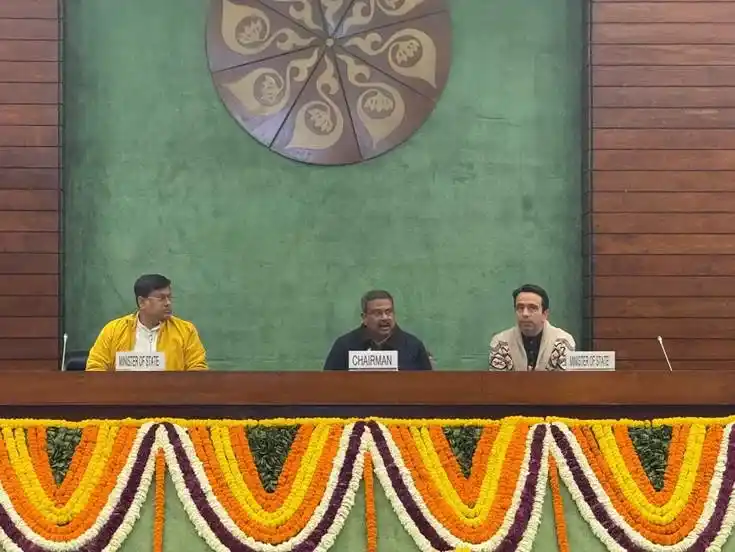
Union Education Minister Shri Dharmendra Pradhan chaired the third meeting of the Consultative Committee on the Use of Artificial Intelligence in Teaching and Learning in New Delhi on December 18, 2025. The high-level meeting was attended by senior officials and stakeholders from across the education landscape.

Among those present were Minister of State for Education and DoNER, Shri Sukanta Majumdar; Minister of State for Skill Development & Entrepreneurship (IC) and Education, Shri Jayant Chaudhary; along with Secretary, Department of School Education & Literacy Shri Sanjay Kumar and Secretary, Department of Higher Education Dr. Vineet Joshi, as well as other senior ministry officials.

Addressing the meeting, Shri Pradhan highlighted the transformative potential of artificial intelligence in education. He emphasised that “AI has the potential to address some of the biggest challenges in education, particularly towards making quality education more inclusive, accessible and equitable.” He expressed appreciation for the committee’s insights and underscored the government’s commitment to enhancing educational outcomes.

Shri Pradhan added, “We remain committed to make learning student-centric and personalised, improve learning outcomes, address the unique requirements of our diverse student community as well as empower students and educators.”

The committee reviewed detailed presentations on integrating AI into both school and higher education. In school education, focus areas included curriculum reforms such as age-appropriate computational thinking, AI literacy from foundational stages, project-based learning, and the formal introduction of AI as a skill subject at the secondary level. Key national digital tools showcased included DIKSHA 2.0, e-Jaadui Pitara, Guru-Mitra, the TARA app, My Career Advisor, and Vidya Samiksha Kendra, all aimed at personalised learning, teacher support, and real-time assessment.

In higher education, discussions centred on AI-enabled curriculum updates in centrally funded institutions, integration of skill-based and interdisciplinary courses, and strengthening infrastructure for advanced learning and research. These interventions aim to build future-ready graduates, foster innovation within higher education institutions, and ensure global competitiveness and inclusivity.

The consultative committee’s work reflects a strategic push to harness artificial intelligence across India’s education system in alignment with the National Education Policy (NEP) 2020.

Use of AI in Teaching and Learning – Key Highlights

CategoryVerified Details
SourcePress Information Bureau (PIB), Government of India – Click Here
Date of MeetingDecember 18, 2025
LocationNew Delhi
ChairpersonShri Dharmendra Pradhan, Union Minister for Education
Committee NameConsultative Committee on the Use of Artificial Intelligence in Teaching and Learning
Meeting NumberThird meeting
Other Ministers PresentShri Sukanta Majumdar (Minister of State for Education and DoNER); Shri Jayant Chaudhary (Minister of State for Skill Development & Entrepreneurship (IC) and Education)
Senior Officials PresentShri Sanjay Kumar, Secretary, Department of School Education & Literacy; Dr. Vineet Joshi, Secretary, Department of Higher Education
Core FocusUse of Artificial Intelligence (AI) in teaching and learning across school and higher education
Minister’s Statement on AI“AI has the potential to address some of the biggest challenges in education, particularly towards making quality education more inclusive, accessible and equitable.”
Minister’s Commitment“We remain committed to make learning student-centric and personalized, improve learning outcomes, address the unique requirements of our diverse student community as well as empower students and educators.”
School Education Focus AreasAge-appropriate computational thinking; AI literacy from foundational stages; project-based learning; introduction of AI as a skill subject at the secondary level
Digital Platforms HighlightedDIKSHA 2.0; e-Jaadui Pitara; Guru-Mitra; TARA app; My Career Advisor; Vidya Samiksha Kendra
Purpose of Digital ToolsPersonalised learning; teacher support; real-time assessment
Higher Education Focus AreasAI-enabled curriculum

VITEEE Counseling 2026 – Schedule, Choice Filling, Step-wise Process, Fees, Who can Participate?

0

VITEEE Counseling 2026 – Vellore Institute of Technology (VIT) will START the VITEEE 2026 counseling process in the 2nd week of May 2026.

The counseling for VITEEE 2026 will be conducted in five phases (based on the VITEEE 2026 ranks of candidates). The counseling will be held rank-wise.

In the previous edition, VITEEE 2025 choice filling for Phase 3 (Rank Above 1,00,000) was conducted from June 20-21, 2025. The seat allotment was announced on June 23, 2025. The seat allotment for Phase 4 (Rank 70,001 to 1,00,000) was announced on June 10, 2025.

Candidates must pay the seat-acceptance fee before the deadline to confirm their seats.

The VITEEE 2025 counseling process is conducted online and open to candidates who have any score above “0”. Those who score ‘0’ in total are declared as ‘Not qualified’ and are not be eligible to participate in the counselling process.

Candidates can check their qualifying status in the VITEEE 2026 scorecard. VIT will declare the VITEEE 2026 results in the 2nd week of May, 2025 (a day or two before counseling start date).

During the counseling registration process, the candidate has to participate in choice filling and pay the counseling fee of INR 5,900. VITEEE 2025 seat allotment will be based on VITEEE 2026 merit rank, preferences opted, category and seat availability.

Candidates who are allotted seats will have to pay the seat-acceptance fee, get documents verified, and complete other admission formalities.

VITEEE 2025 exam will be conducted from April 28-May 3, 2026.

Latest Updates:

VITEEE Counseling Schedule 

The VITEEE 2025 rank-wise counseling schedule is given below, including fee payment, choice-filling, and seat-allotment dates.

RankFee PaymentChoice Filling and LockingSeat Allotment
Phase 1 (Rank 1 to 20,000)May 4 to 6, 2025May 7 to 9, 2025May 10, 2025
Phase 2 (Rank 20,001 to 45,000)May 4 to 15, 2025May 16 to 17, 2025May 19, 2025
Phase 3 (Rank 45,001 to 70,000)May 4 to 26, 2025May 27 to 28, 2025May 30, 2025
Phase 4 (Rank 70,001 to 1,00,000)May 4 to June 6, 2025June 7 to 8, 2025June 10, 2025
Phase 5: (Above 1,00,000)May 4 to June 17, 2025June 20 to 21, 2025June 23, 2025

VITEEE 2025 Counselling – Eligibility Criteria

The VITEEE 2025 admission criteria vary for each of the VIT campuses as discussed below. 

  • Candidates with a rank between 1 and 1,00,000 in VITEEE 2025 will be eligible to take part in counselling for admission in all four campuses – VIT Vellore/ VIT Chennai/ VIT Bhopal (MP)/VIT-AP.
  • Candidates who will be ranked above 1,00,000 will be eligible for admissions to VIT AP and VIT Bhopal only.

So, to get admission to their preferred VIT Campus, the candidate must meet the eligibility criteria for that institute.

VITEEE 2026 Counselling – Stepwise Process

The counseling for VITEEE 2026 will be conducted online. The stepwise counseling process is explained below.

  1. Payment of counseling fee – Candidates who meet the VITEEE 2026 counseling eligibility criteria must pay the VITEEE 2026 counseling fee of INR 5,900. The fee has to be paid online.
  2. Choice Filling – Next, the candidate will have to fill in the choice of academic institutes (VIT campuses) and course option in the order of priority. It is recommended that the candidate selects a minimum of 25 choices.
  3. Seat Allotment – The allotment of seats will be based on – 1) VITEEE 2026 merit rank, 2) preferences opted during the choice filling process, and 3) seats available for the counseling round.
  4. Payment of seat-acceptance fee – Candidates who are allotted seats need to pay the seat acceptance fee to confirm their seats.

VITEEE-2025-Online-Counselling-for-B-Tech-Admissions-2025-26

VITEEE 2025 Online Counselling for B Tech Admissions 2025 26

Also Read:

VITEEE Counseling 2025 – Choice Filling

Candidates who have been shortlisted for VITEEE 2025 counseling next has to participate in a choice-filling process during which they need to select:

  • Campus
  • Core Program
  • Fee category
  • Specialization/ Minor (Optional and not counted for priority)

The entries must be in the order of priority.

Important Note:

  • Candidates must provide as many choices as possible for seat allotment.
  • Once a seat has been allotted, campus/ program/ category cannot be changed.
  • You mustn’t share your login credentials with others for security purposes.

To watch official VITEEE 2025 Counseling Demo -VideoClick Here

Document Checklist for VITEEE 2025 Counseling

The candidate will need the following documents to participate in the counseling process:

  • VITEEE 2025 Admit Card
  • VITEEE 2025 Counselling Call Letter
  • VITEEE 2025 Scorecard
  • Birth Certificate 
  • Qualifying examination mark statements of all attempts
  • Transfer Certificate / School Leaving Certificate
  • Migration Certificate (if issued by the board)
  • Community Certificate (SC/ST candidates only)
  • Nativity Certificate (For candidates hailing from Jammu and Kashmir and the North-Eastern states of Arunachal Pradesh, Assam, Manipur, Meghalaya, Mizoram, Nagaland, Sikkim and Tripura)
  • Student Profile (if not submitted at the time of counselling)
  • Recent passport size colour photos – 4 Nos.
  • Affidavit to be signed separately by the student, parent and hostel on an INR 20 non-judicial stamp paper (format available on VIT website)
  • Certificate of Physical Fitness (Format available on VIT website)
  • 2 sets of photocopies of all original documents (Except Affidavits / Physical Fitness Certificate / Student Profile)

VITEEE 2025 Tuition Fee

The program and category-wise VITEEE Tuition Fee 2025 is given below.

Group A

Scholarship CategoryTotal Fee (INR)Advance Fee (INR)Balance Fee (INR)
I1,76,0001,50,00026,000
II2,35,0001,50,00085,000
III3,43,0002,00,0001,43,000
IV3,68,0002,00,0001,68,000
V3,98,0002,50,0001,48,000

Group B

Scholarship CategoryTotal Fee (INR)Advance Fee (INR)Balance Fee (INR)
I1,98,0001,98,0000
II3,07,0002,00,0001,07,000
III4,05,0002,50,0001,55,000
IV4,48,0003,00,0001,48,000
V4,93,0003,00,0001,93,000

Read More:

VITEEE Result 2026: Date, Scorecard Download Link, Merit Rank, Shortlisting for Counseling

0

VITEEE Result 2026 – Vellore Institute of Technology (VIT) will declare the results of VITEEE 2026 in the 2nd week of May 2026. The link to download the scorecard of VITEEE 2026 will be provided here.

To download your result, log-in to the result portal using VITEEE 2026 application number and password.

The VITEEE 2025 scorecard will contain details like the sectional and overall score, percentile score, and VITEEE 2026 merit rank of the candidate.

The VITEEE merit rank 2026 will be used for VITEEE 2026 counseling and seat allotment process.

VITEEE 2026 exam will be conducted from April 28-May 3, 2026.

Latest Updates:

  • VITEEE 2026 application form (OPEN) – Apply Here

VITEEE Result and Exam Dates 2026

Candidates can check the VITEEE 2026 exam and post-exam schedule in the table given below.

EventsDates
VITEEE 2026 exam dateApril 28-May 3, 2026
Declaration of Results2nd week of May 2026
Counseling 2nd week of May 2025 (Onward)

How to check VITEEE 2026 results

To check the results of VITEEE 2026 and download the scorecard, the candidate needs to follow these steps:

  1. Go to the VITEEE 2026 admission portal
  2. If the results are live, the VITEEE result 2026 log-in link will be activated
  3. Click on the result link
  4. In the log-in window that opens, enter your application number and password.
  5. The VITEEE 2025 scorecard will be displayed on the screen
  6. Download and take a printout of the VITEEE scorecard 2026.

Details mentioned on VITEEE Scorecard 2026

VIT will release the scorecard of VITEEE 2026 on its admission portal. The scorecard will carry the following information:

  • Application number of the candidate
  • Gender
  • Date of birth
  • VITEEE 2026 sectional and overall scores
  • VITEEE merit rank 2026

VITEEE Rank List 2026 – Shortlisting for Counseling

VIT will use the percentile score of VITEEE 2026 to prepare the rank list.

Requests for re-ranking and re-totaling of the VITEEE 2026 rank list will not be entertained.

The VITEEE 2026 rank list will be used to shortlist candidates for VITEEE 2026 counseling.

The allotment of seats will be merit-based, with higher-ranked candidates to be given preference.

Equating Methodology for adjusting VITEEE 2026 scores

VIT will use an equating methodology to adjust test scores. Refer to the image given below for more details.

VITEEE 2025 result equating methodology

VITEEE Toppers List

VITEEE Topper List 2024

Name of the TopperVITEEE 2024 Merit Rank
Rupinder Singh1
Bhanu Mahesh Chekuri2
A Vedaanthh3
Aayushi Baid4
Sanvi Singh5
Abhiraj Ramakant Yadav6
Chaitanya Ramesh Bochre7
Vicky Kumar Singh8
Sohan Hazra9
Sahil10

Also Read:

VITEEE Topper List 2023

The list of toppers for VITEEE 2023 exam is given in the table below.

Name of the TopperVITEEE 2023 Merit Rank
Kushagra Bashisth1
Shrinivas Choudhary2
Mahin Pramod Dhoke3
Ashik Stenny4
Ankit Kumar5
Nandyala Prince Branham Reddy6
Md. Umar Faisal7
Anshul Sandeep Naphade8
Rishit Gupta9
Tanmay Baghel10

VITEEE Topper List 2023

Name of the TopperVITEEE 2023 Merit Rank
Tanush Goel1
Anirudh2
Thomas Biju Cheeramvelil3
Kushagar Garg4
Tapan Jaydeo Wankhade5
Naman Agrawal6
Prashant Kumar7
Kritang Kothari8
Anish Bonda9
Anirudh Garg10

Also Read:

VITEEE Admit Card 2026 – Date, Download Link, Slot Booking through OTBS, How to FIX Discrepancies

0

VITEEE Admit Card 2026 – Vellore Institute of Technology (VIT) will release the VITEEE 2026 admit card 48 hours before the booked schedule. The copy of the e-Admit Card will also be emailed to the candidate.

To direct link to download the VITEEE 2026 admit card will be provided here.

Log-in to the Online Test Booking System (admit card download portal), using your application number, password, and email ID.

The candidate must book their slots (exam schedule) through the Online Test Booking System (OTBS) before the last date. For candidates who don’t complete the slot-booking process, slots will be allocated based on information entered during submission of the VITEEE 2026 application form.

The admit card will contain details like roll number, application number, date and exam timings, VITEEE 2026 exam center details, photograph, exam center reporting time, and exam-day guidelines. Discrepancies, if any, must be brought to the notice of VIT immediately.

On the day of the VITEEE 2026 exam, the candidate must bring their admit card and a valid photo ID proof.

Latest Updates:

  • VITEEE 2026 application form (OPEN) – Apply Here

VITEEE 2026 Slot Booking 

Before you can download the e-admit card, you are required to book your slots (or exam schedule) through the Online Test Booking System (OTBS). If you don’t book a slot, then you will be automatically allotted a slot based on the availability of slots and information entered when filling the VITEEE 2026 application form.

The direct link to book slots for VITEEE 2026 will be provided here.

Use your VITEEE 2026 application number and password to login to the VIT OTBS. Note that slots will be allocated on a first-come, first-served basis.

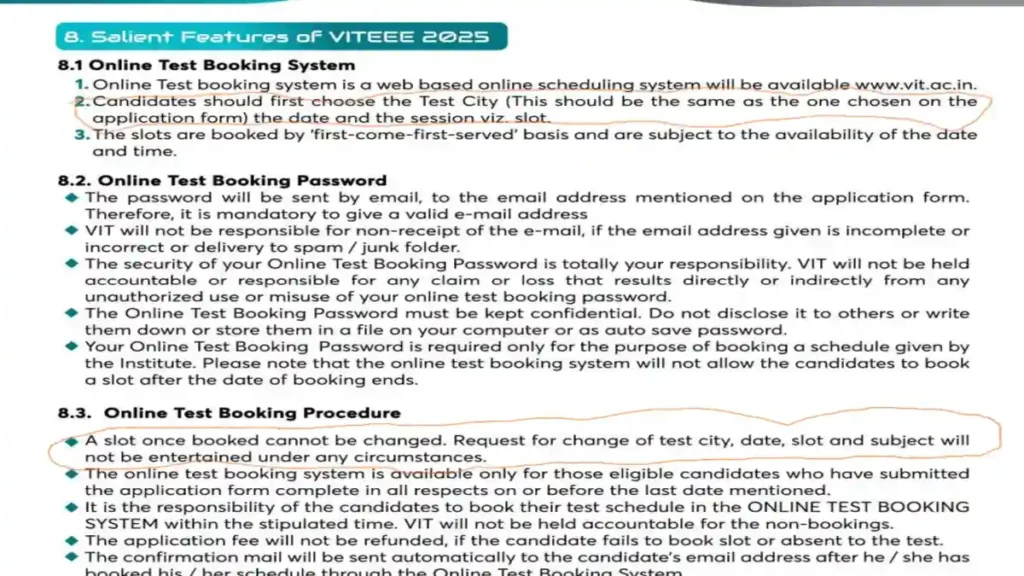
During the slot booking process, you need to confirm the test city, date, time, and also the subject.

The e-admit card with the address of the test venue and schedule will be available for download before 48-hours of the book schedule. It will contain the application number, photograph of the candidate, test center name and address, test date and time, etc.

Note that slots once allocated cannot be changed.

VITEEE 2026 Slot Booking Window

This is what the VITEEE slot booking window will look like:

VITEEE 2025 Online Test Booking System 1 1

How to download VITEEE 2026 Admit Card

The Vellore Institute of Technology (VIT) will release the VITEEE admit card online at viteee.vit.ac.in. The admit card can be downloaded online through the VIT exam portal. Additionally, the copy of the e-Admit Card will also be emailed to the candidate.

Hardcopies of the VITEEE 206 admit card will not be dispatched to candidates via post or fax.

Note that before the candidate can download the admit card, they need to first complete the VITEEE 2026 slot booking process.

To download the admit card, follow these steps:

  1. Go to the VITEEE 2026 admission portal – Click Here
  2. Books slots for the VITEEE exam
  3. Once the VITEEE slot booking 2026 process is complete, the admit card will be generated.
  4. Log-in to the admit card download portal using your application number and password
  5. The VITEEE 2026 admit card will be displayed on the screen 
  6. Download and take a printout of the admit card.

Details mentioned on the VITEEE 2026 Admit Card

The admit card for VITEEE 2026 will carry the following information:

  • Candidate’s name
  • Application number
  • Roll number
  • Exam date and timings
  • VITEEE 2026 exam center name and address
  • Course opted for admission
  • Signature
  • Photograph
  • Exam center reporting time
  • Exam-day guidelines

Also Read:

Documents required for appearing in VITEEE 2026 Exam

On the day of the exam, the candidate must bring the following documents with them:

  • e-Admit Card
  • Photo ID proof – Only original and valid IDs will be accepted. Photocopies will not be accepted.

Accepted ID proofs: School or college Photo ID card, Twelfth Standard board exam hall ticket (or) admit card
bearing photo, Masked Aadhar Card, Passport, Driving License, Voter ID card, or IT Pan Card.

What to do if I am not able to download VITEEE Admit Card 2026?

In case you are not able to download the admit card for VITEEE 2026 for any reason or there is any discrepancy, you must contact exam officials at the earliest at the following address.

Email
btechapplication@vit.ac.in

Helpline Number
044-46277555
Monday to Saturday (9.00 am to 5.00 pm)
(Excluding public holidays)

VITEEE Exam Center 2026 – City-wise List, How to Select, Reporting Time, Slot Booking

VITEEE Exam Center 2026 – VIT will conduct the VITEEE 2025 exam in 122 cities across India. The list of VITEEE 2026 exam cities will be mentioned in the VITEEE 2026 information brochure.

The candidate can select their choice of exam city when filling out the VITEEE 2026 application form. An exam city may have one or more exam centers. The allotment of exam centers will be based on the address and exam city opted by the candidate.

The name and address of VITEEE 2026 exam center allocated will be mentioned on the VITEEE 2026 admit card. The admit card will also carry the exam center reporting time, exam date and timings, and exam-day guidelines.

On the day of the exam, you must bring the admit card and a valid photo ID proof. The VITEEE 2026 exam will be conducted from April 28 to May 3, 2026. Keep reading to learn more about VITEEE 2026 exam center.

Latest Updates:

  • VITEEE 2026 application form (OPEN) – Apply Here

List of VITEEE Exam Center 2026

The VITEEE 2026 exam will be conducted in the following cities. The candidate can select their preferred choice when filling out the VITEEE 2026 application form.

StateTest CityS.No
Andaman & NicobarPort Blair (Sri Vijaya Puram)1
Andhra PradeshAmaravati (AP)2
Anantapur3
Eluru4
Kurnool5
Nellore6
Rajamahendravaram7
Srikakulam8
Tanuka9
Tirupati10
Visakhapatnam11
Arunachal PradeshItanagar12
AssamGuwahati13
Dibrugarh14
Silchar15
BiharPatna16
Bhagalpur17
Gaya18
Muzaffarpur19
ChandigarhChandigarh20
ChattisgarhBhilai21
Bilaspur22
Raipur23
DelhiNew Delhi24
GujaratAhmedabad25
Jamnagar26
Rajkot27
Surat28
Vadodara29
HaryanaHisar30
Faridabad31
Gurugram32
Kurukshetra33
JharkhandBokaro34
Dhanbad35
Jamshedpur36
Ranchi37
KarnatakaBangalore38
Hubli39
Mangaluru40
Mysuru41
KeralaKochi42
Kozhikode43
Thiruvananthapuram44
Thrissur45
Madhya PradeshBhopal46
Gwalior47
Jabalpur48
MaharashtraAmravati49
Aurangabad50
Latur51
Mumbai52
Nagpur53
Nasik54
Pune55
Solapur56
Thane57
OdishaBrahmapur58
Bhubaneswar59
Rourkela60
PuducherryPuducherry61
PunjabAmritsar62
Bhatinda63
Jalandhar64
Ludhiana65
RajasthanAjmer66
Bikaner67
Jaipur68
Jodhpur69
Kota70
Udaipur71
Tamil NaduChennai72
Coimbatore73
Erode74
Kumbakonam75
Kancheepuram76
Madurai77
Nagercoil78
Salem79
Tiruchirappalli80
Tirunelveli81
Vellore82
TelanganaHyderabad83
Karim Nagar84
Khammam85
Mahbubnagar86
Nalgonda87
Warangal88
TripuraAgartala89
Uttar PradeshAgra90
Aligarh91
Bareilly92
Gorakhpur93
Ghaziabad94
Jhansi95
Kanpur96
Lucknow97
Mathura98
Meerut99
Moradabad100
Prayagraj101
Noida102
Raebareli103
Saharanpur104
Varanasi105
West BengalKolkata106
Durgapur107
Siliguri108
Asansol109
GoaAssagao110
Himachal PradeshDharamshala111
Simla112
Jammu & KashmirSrinagar113
Jammu114
ManipurImphal115
MeghalayaShilong116
MizoramAizawl117
NagalandDimapur118
SikkimGangtok119
UttarakhandDehradun120
Pantnagar121
Roorkee122

Also Read:

How to check details of VITEEE 2026 exam center allocated

The name and address of the VITEEE exam center 2026 allocated to the candidate will be mentioned on the admit card. So, check the details after downloading the admit card.

If there are any issues with the allotted exam center, contact exam officials immediately to get the desired solution. Here are some issues that you may face:

  • Allotment of wrong exam center
  • Information missing, for instance, the address of the exam center, or even the roll number
  • The name is incorrectly spelled
  • The wrong photograph is uploaded
  • Or, some information is blurred.

In any of the above or similar issues, contact VITEEE exam officials at the below address.

VITEEE 2025 Contact Information

Email
btechapplication@vit.ac.in
Helpline Number
044-46277555
Monday to Saturday (9.00 am to 5.00 pm)

How to Select VITEEE Exam City 2026

The candidate has to select their preferred exam center when filling out the VITEEE 2026 application form. Follow these steps to select an exam city.

  1. Log-in to the registration portal
  2. After getting registered, you will get the option to select an exam city
  3. Select the nearest city (or your preferred city option) from the drop-down menu
  4. After completing the rest of the application form, submit it.

Note that the VITEEE 2026 exam center allocated to the candidate will be mentioned on the admit card.

Also, the allotment of exam center will be based on factors like:

  • The exam city selected by the candidate
  • The candidate address entered when filling the form.

Can I change my VITEEE 2026 Test City?

The candidate is allowed to change the test city option till the closure of the VITEEE application form.

But once the application form closes, the city option can’t be edited any further. Also, exam officials will not entertain any requests for a change in the exam city. Note that the test city selected by the candidate at the time of VITEEE 2026 slot booking must be the same as the one chosen on the application form.

In addition to the test city, the candidate is also not allowed to date, slot, and subject. So, be careful when filling out the application form.

VITEEE selection of exam city

CSIR NET December 2025 answer key expected to be released soon

0

The National Testing Agency (NTA) will soon release the provisional answer key for the Joint CSIR-UGC NET December 2025 examination. 

The CSIR-UGC NET December 2025 exam was conducted on December 18, 2025, in computer-based test mode at various centres across the country.

Candidates who appeared in the exam can check the provisional answer key along with their individual response sheets on the official website, csirnet.nta.nic.in. The CSIR NET exam is held to determine eligibility for Junior Research Fellowship (JRF) and Assistant Professor positions in subjects including Life Sciences, Physical Sciences, Chemical Sciences, Mathematical Sciences, and Earth, Atmospheric, Ocean and Planetary Sciences.

As per past trends, the provisional answer key is usually released within a week of the examination. After its release, candidates will be given an opportunity to raise objections if they find any discrepancies in the answers provided. Objections can be submitted online by paying a prescribed fee for each question challenged.

Once the objection window closes, the NTA will review the challenges submitted by candidates. Based on this review, a final answer key will be prepared. The CSIR NET December 2025 result is expected to be announced in January 2026 on the basis of the final answer key.

To download the CSIR NET December 2025 answer key, candidates will need to visit the official website, click on the answer key link, and log in using their application number and date of birth. It is advised that candidates regularly check the official portal for the latest updates and notifications related to the examination.

UGC NET December 2025 Exam Schedule Out; NTA Releases Official Timetable

0

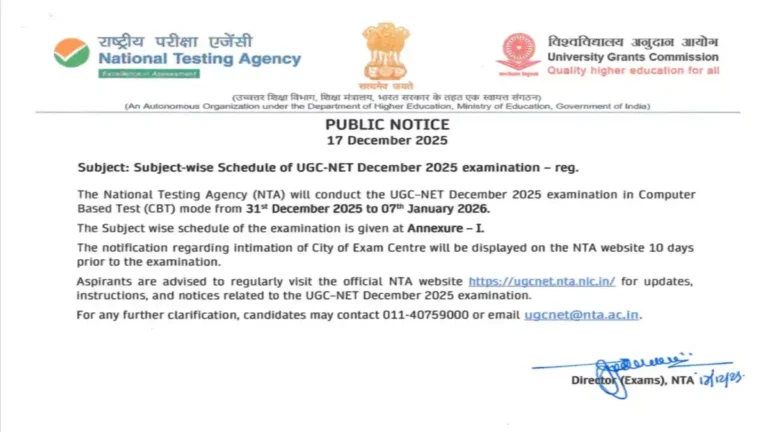
The National Testing Agency (NTA) has released the official exam schedule for the UGC NET December 2025 session, giving candidates clarity on dates, subjects and shift timings for the upcoming national-level eligibility test. The detailed timetable is now available on the official NTA/UGC NET portal (also given here), allowing aspirants to plan their final preparation and logistics.

According to the official schedule, the University Grants Commission National Eligibility Test (UGC NET) December 2025 will be conducted in Computer-Based Test (CBT) mode for around 85 subjects from 31 December 2025 to 7 January 2026.

Latest Updates:

  • To download the UGC NET 2025 Exam Schedule – Click Here

UGC NET December 2025 Exam Shifts

The exams will be held in two daily shifts:

  • Shift 1: 9:00 AM to 12:00 PM
  • Shift 2: 3:00 PM to 6:00 PM

Candidates will need to check the subject-wise schedule released by NTA to know the exact date and shift of their respective papers. 

UGC NET is a high-stakes examination conducted by the NTA on behalf of the University Grants Commission (UGC) to assess eligibility for Assistant Professor posts, Junior Research Fellowship (JRF) and PhD admissions in universities and colleges across India. 

Along with the timetable, the official release also includes NTA guidelines that candidates must follow during the examination. These generally cover reporting times, exam conduct rules, document requirements and other crucial instructions to ensure a smooth and fair testing process. 

City Intimation Slips and Admit Cards

The city intimation slips, which inform candidates of their exam city, are expected to be released about 10 days before the start of the exam, helping candidates make travel arrangements in advance. The admit cards will follow later and must be downloaded from the official UGC NET website before the exam. 

With just weeks to go before the examination begins, aspirants are advised to regularly check ugcnet.nta.nic.in and nta.ac.in for the latest updates, exam day instructions and resources to prepare for the test.

NCERT Announces 173 Non-Teaching Vacancies for 2025-26; Online Applications Soon

0

The National Council of Educational Research and Training (NCERT) has released a significant recruitment notification for the 2025-26 cycle, inviting applications for a wide range of non-teaching positions across the country. According to the official short notification released on 17 December 2025, a total of 173 non-academic vacancies have been announced, spanning Group A, B and C posts under various pay levels. 

This recruitment drive is aimed at strengthening NCERT’s administrative and support workforce at its headquarters in New Delhi and at regional institutes nationwide. The vacancies cover a spectrum of roles including clerical assistants, laboratory assistants, office support staff and other essential non-teaching functions.

Here is the vacancy notification released by the NCERT

NCERT Non Teaching Vacancies recruitment 2025 26

Vacancy Breakdown and Pay Levels

The announced positions are categorised under the 7th Central Pay Commission pay matrix, with posts at:

  • Levels 2–5: Majority of openings (138 posts)
  • Levels 6–8: 26 posts
  • Levels 10–12: 9 posts

Across these levels, candidates from Scheduled Castes (SC), Scheduled Tribes (ST), Other Backward Classes (OBC-NCL), Economically Weaker Sections (EWS), and unreserved categories will be eligible under the Government of India’s reservation rules. 

Selection Process and Important Dates

According to official information, the NCERT recruitment process will involve an open competitive examination, followed by skill tests or interviews where applicable, depending on the post applied for. Candidates who qualify will proceed through document verification and other formal stages before final selection. The detailed notification — including eligibility criteria, syllabus and application timelines — is expected to be released shortly on the official website. 

Applicants are advised to monitor the NCERT official portal (ncert.nic.in) under the “Vacancies” section for the release of the detailed advertisement and formal online application link. Once published, candidates will typically have a 21-day window from the start date to submit their applications. 

This recruitment presents a valuable opportunity for job seekers aspiring to build a career within one of India’s premier educational research institutions.

NCERT Non-Teaching Recruitment 2025 – Quick Overview

FeatureDetails
Recruiting BodyNational Council of Educational Research and Training (NCERT) 

To visit NCERT portal – Click Here
Recruitment Cycle2025-26 
Notification ReleasedShort notification published on 17 December 2025 
Total Vacancies173 non-teaching posts 
Post TypesGroup A, B & C (Non-Academic) 
Pay Levels (7th CPC)Levels 2–5, 6–8, 10–12 
Application ModeOnline only via NCERT portal 
Official Websitencert.nic.in (Vacancies / recruitment section) 
Selection ProcessCompetitive examination + Skill Test / Interview (as per post) 
Application WindowThe application link will be activated on the date of publication of the advertisement in the Employment News.

The deadline to submit applications is 21 days from publication.
Job LocationsNCERT HQ (New Delhi) + Various Regional Centres across India 
Age LimitTypically varies by post 
Educational QualificationAs specified per post in the detailed notification (varies by level) 
Salary Range (Basic)Post-specific in pay levels 2–12 per 7th CPC (exact depends on post) 
Vacancy BreakdownLevel 2–5: 138
Level 6–8: 26
Level 10–12: 9
ReservationAs per Government of India norms (UR/SC/ST/OBC-NCL/EWS) 

NCERT Non-Teaching Vacancy Distribution (2025-26)

Post Level (Group A/B/C)SCSTOBC (NCL)EWSURTotal
Levels 10–12101169
Levels 6–812821326
Levels 2–5121635867138
Grand Total1418441186173